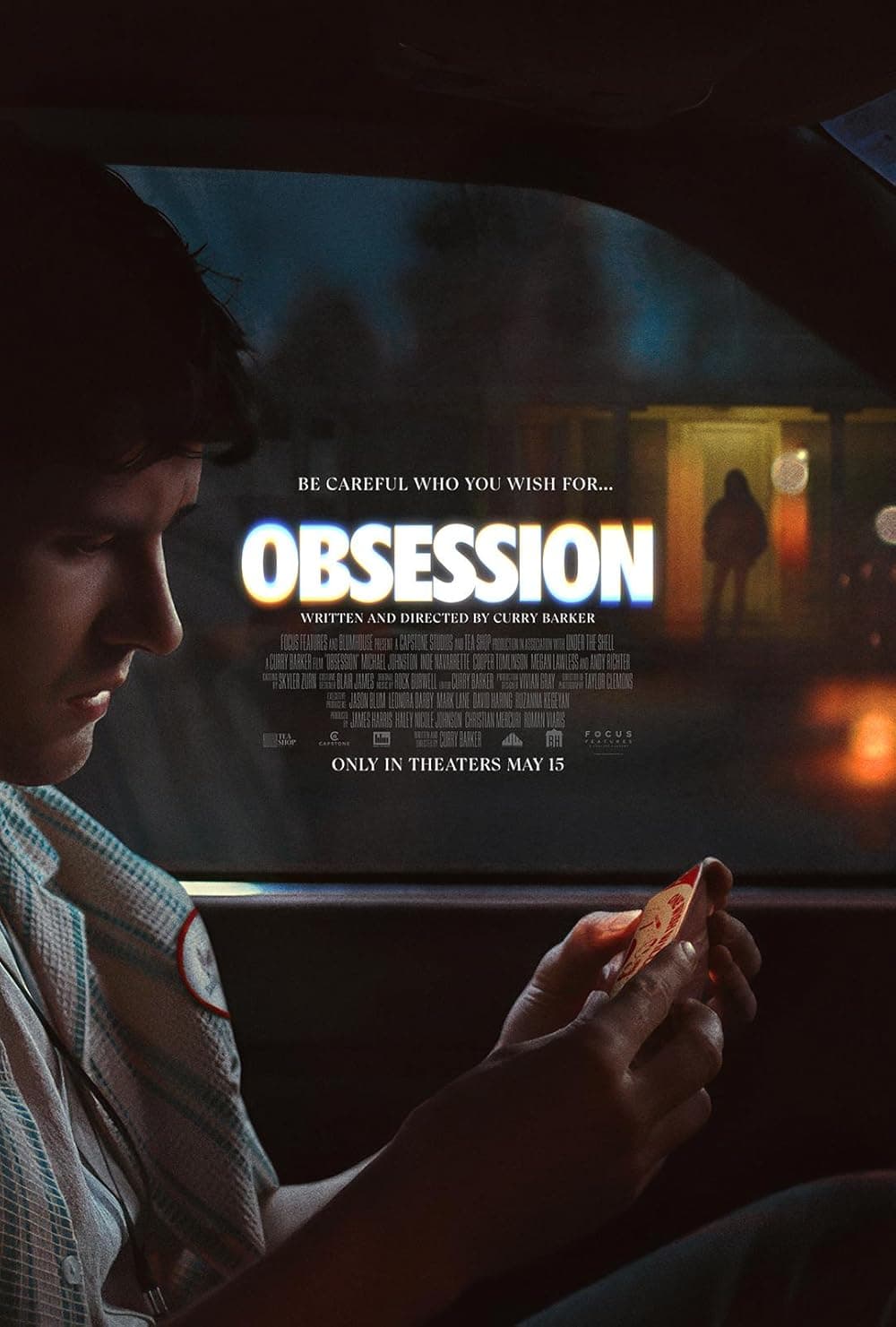
Be careful who you wish for.
Behind the scenes
How Obsession was filmed
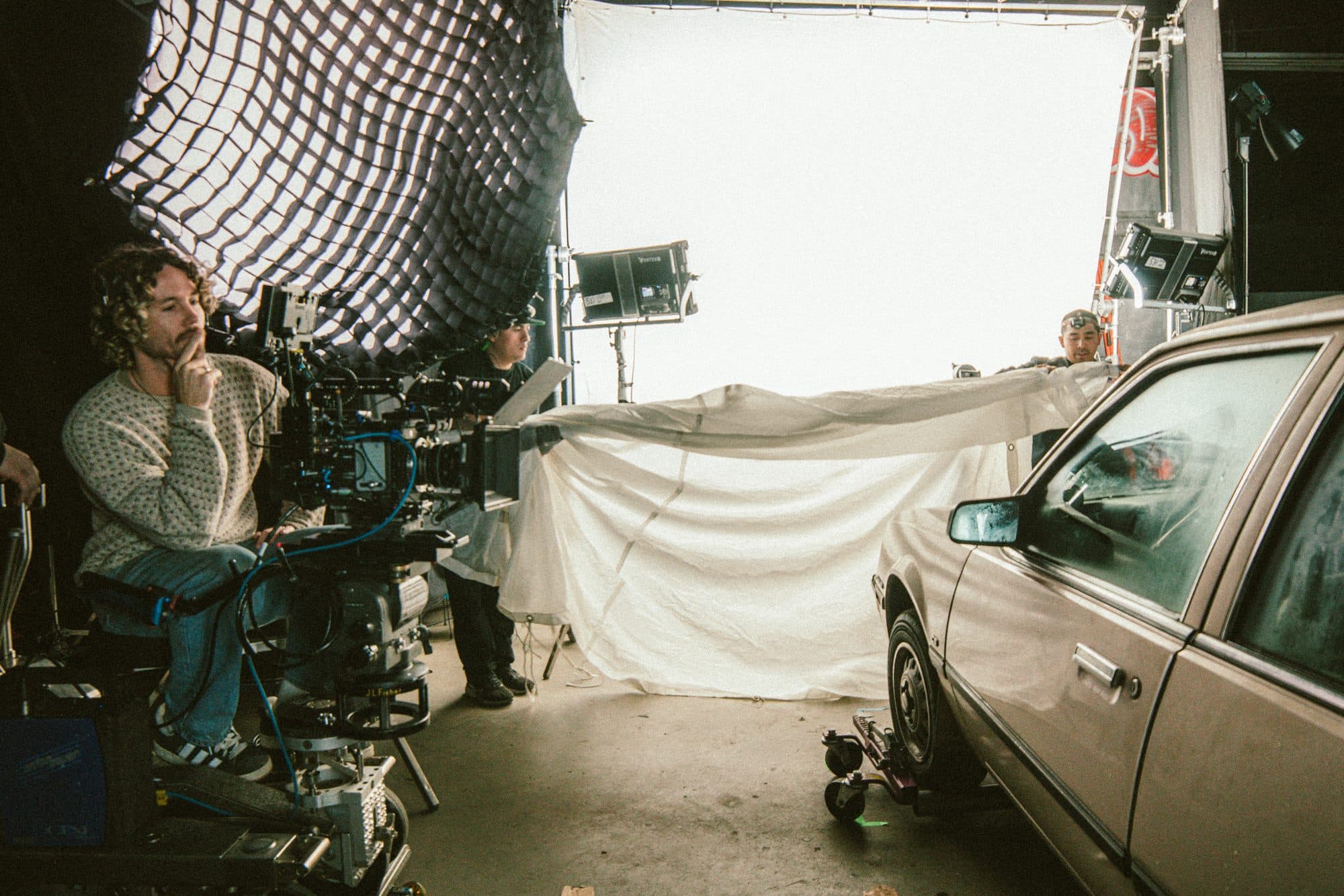
The driving scenes were shot on our LED volume in North Hollywood.
Obsession is a $650,000 horror movie that Curry Barker made independently. It premiered to a name-chanting crowd at Toronto, sparked an A24, Neon, and Focus Features bidding war, and went on to gross hundreds of millions. Here is how its driving scenes, and its most infamous one, came together on our stage.
On our channel: the Obsession lighting crew break down exactly how the driving scenes were shot on the volume.
Why an LED volume
An LED volume puts the world on the wall instead of behind it. The environment plays back on a wall of screens while the camera is tracked in real time, so the view through the windows moves with the shot and the light spills onto the car and the actors for real.
DP Taylor Clemons even 3D-scanned locations into a game engine and pre-lit the whole film before a fixture was rigged, which matters on a movie this size. “We had very little crew,” the team said. “We had a lot of work to do, and we wanted to take the time to do everything very well.”
Where the wall meets the glass
The opening drive, Nikki and Bear heading home, was the first scene shot on our stage, its driving plates filmed in Atlanta and played back across the wall.
What makes it read as real is the reflections. The car sits inside the wall, side panels and all, so the world does not just show through the windows, it bounces off the glass and the paint. Headlights and signage streak over the windshield the way they would on a real road, because that light is actually in the room. The crew’s hardest job, gaffer Christopher Oh said, was keeping their own fixtures off the screen, so the only thing in the reflection was the world on the wall.
Then production designer Vivian Gray layered grease, grime, and haze onto the glass. The dirty windows catch those reflections and break them up, so your eye reads a filthy 2am windshield instead of a screen. The wall throws the light, the grime sells it, and the seam between the car and the wall disappears.
Curry called for red
Later, Bear reads a rejection letter on a lookout and screams, an incredible take from Michael Johnston. From behind the lighting console, Barker called an audible: turn the whole world red, live, right as he screams.
“I didn’t even have a red in my console for this movie,” the programmer remembered. It is a cue that only works because the environment is a wall you can redraw in a second, not a plate locked in post.
The scene that couldn’t be shot anywhere else
SpoilerThe film’s most talked-about moment happens in a truck at 2am. Bear and Sarah (Megan Lawless) share a quiet, warmly lit beat, and then Nikki arrives at the window. Inde Navarrette plays her, and what she does with a brick is the death people leave the theater talking about.
The crew had two takes and a limited supply of shatterable glass, with no room to miss. “Sarah’s death was one of my favorite days on set to date,” the gaffer said. “It was such a flex for every department.”
Why not green screen
Barker edits his own films, so a wall of green was a nonstarter. “I’m not good at compositing or CGI, that’s just not my thing,” he said. “Knowing that I’m the guy that’s going to put this together, I was like: I don’t trust it.”
On the volume, what the camera captured was final. The reflections were real, the light was real, and there was nothing to fake in the edit.
“That scene, more than anything else we filmed here, really couldn’t have been done anywhere else. We wouldn’t have had the amount of control we did.”The Obsession lighting crew
- Written & directed by
- Curry Barker
- Cinematographer
- Taylor Clemons
- Made for
- $650,000
- Grossed
- $300M+ worldwide
- World premiere
- TIFF 2025, Midnight Madness
- Shot on our stage
- Driving scenes + Sarah’s death
More from the shoot
Behind the scenes on the volume at our North Hollywood studio.
Want the same look?
Book our LED Wall in North Hollywood by the hour or the day, or tell us about your shoot and we will help you dial in the setup, from simple driving plates to a fully tracked virtual production.